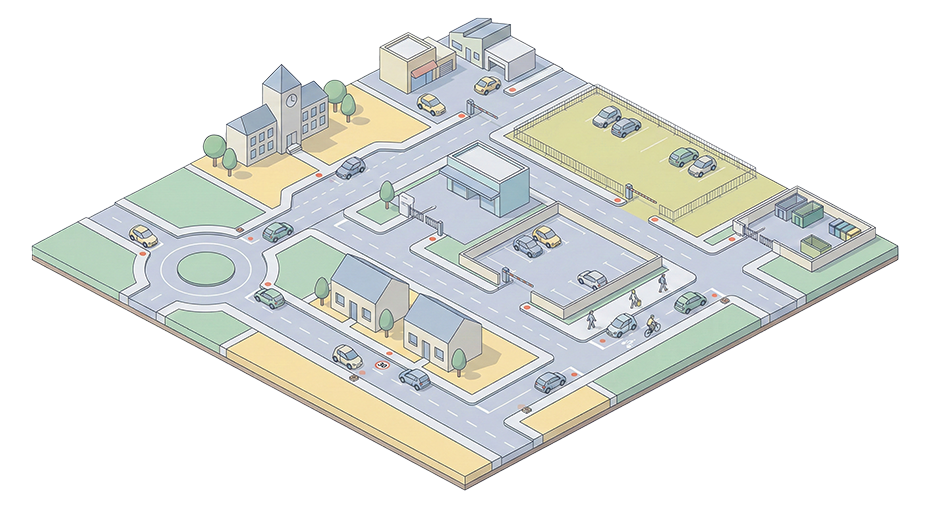
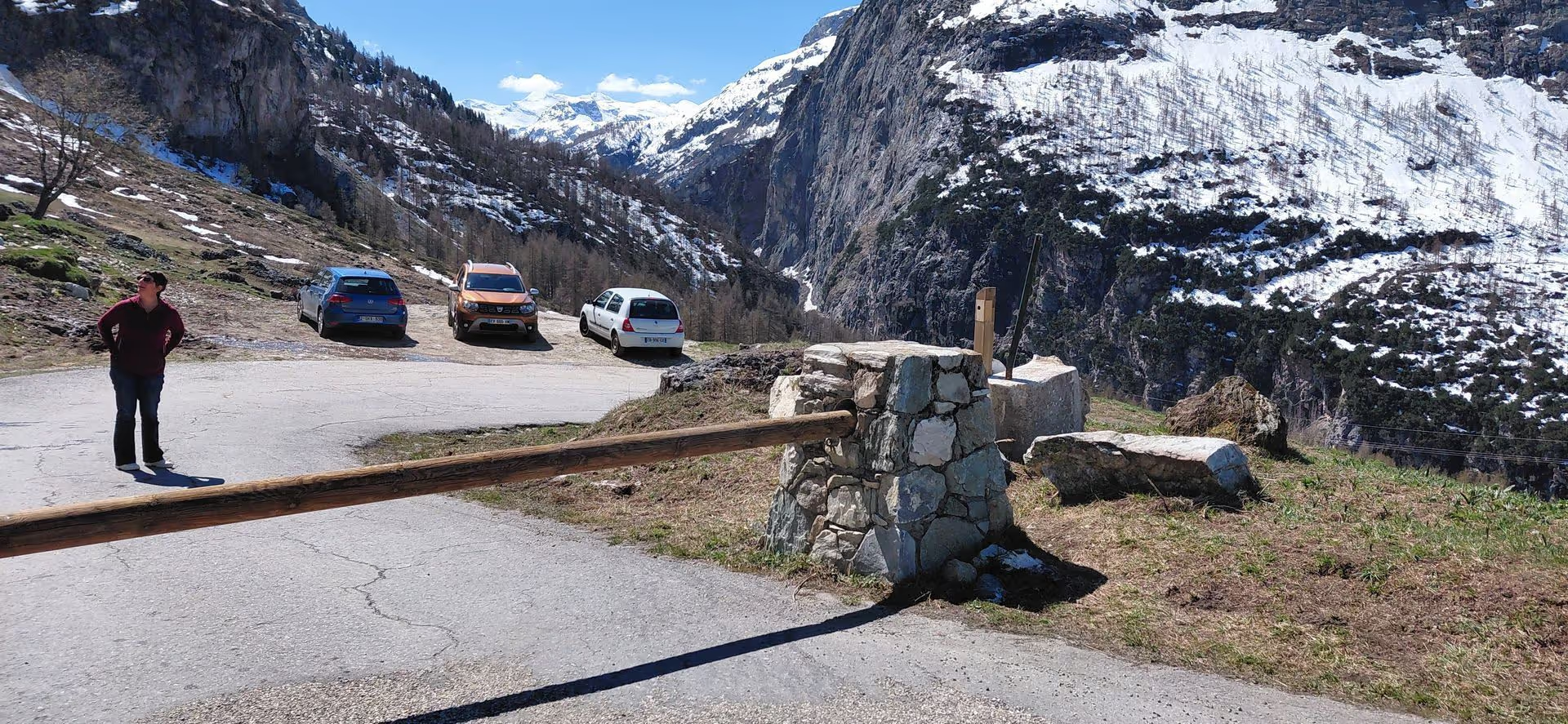
The sensor delivers its best performance where motorised flows are naturally channelled: narrow streets, parking accesses, site entrances, shared routes, junction approaches or traffic-calmed areas. These contexts represent most real-world needs for local authorities and site managers: places where you want to quantify volumes, document nuisance, secure a passage or track the impact of an improvement.


_logo_2015.svg.avif)








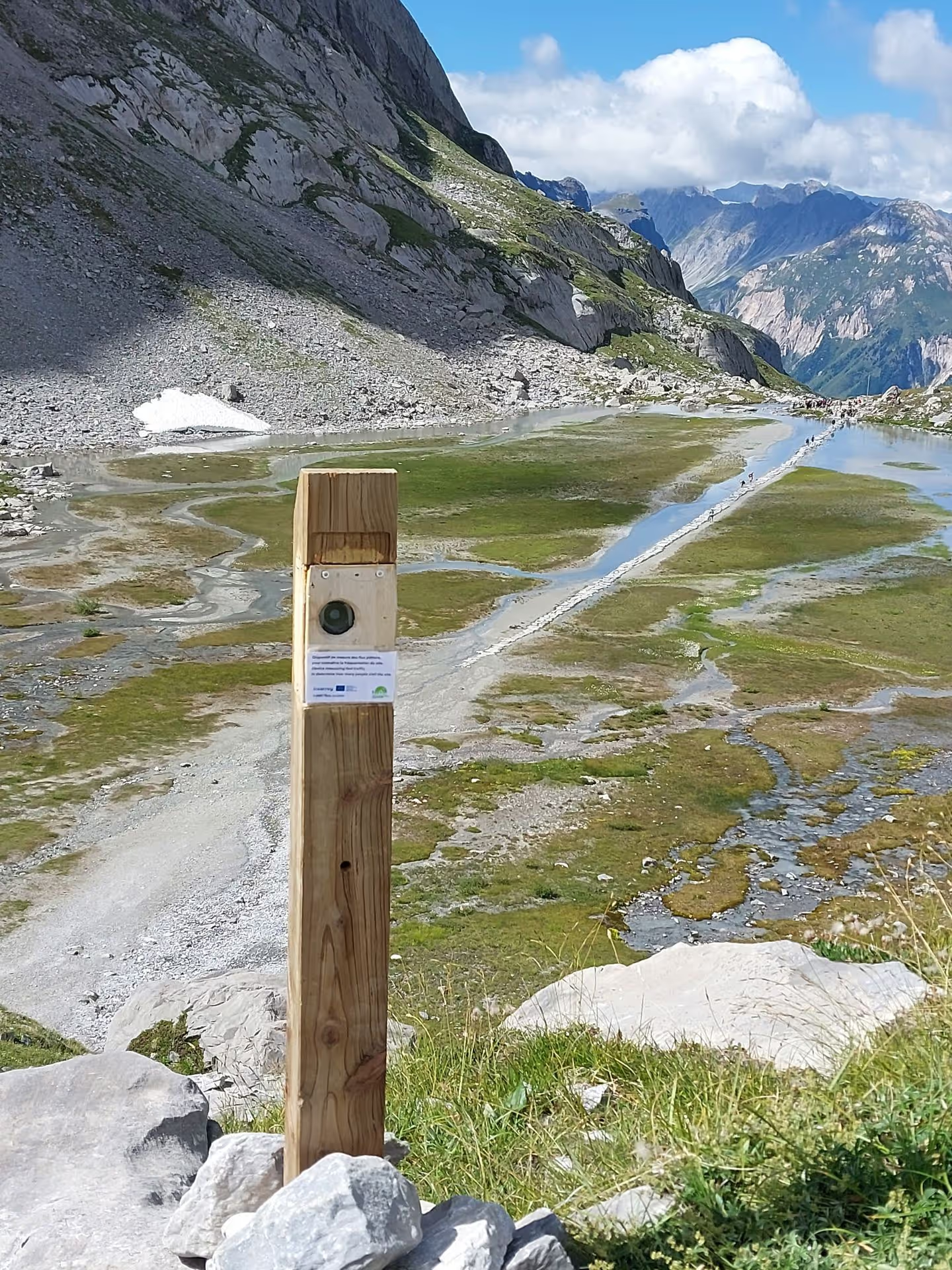
Motorised contexts do not always require heavy systems. Verdilo provides a simple, autonomous approach to measure vehicle passages in controlled accesses, car parks, narrow streets and shared routes. Its technical characteristics are designed to deliver reliable, actionable data that is quick to deploy — with no civil works and no power supply.
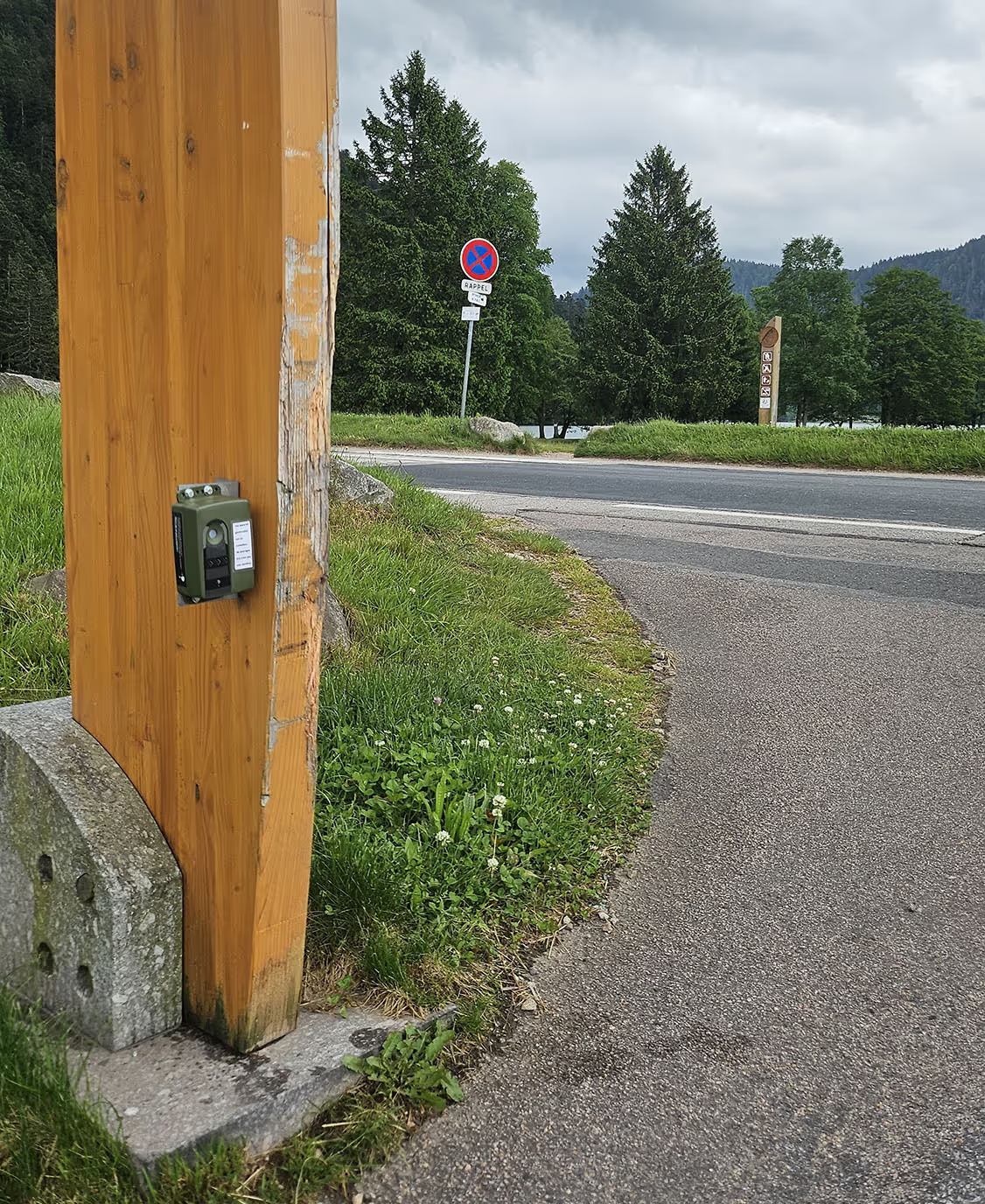



Works without power supply (Autonomy estimated at more than 2 olds).

Set up in 2 minutes, with no expertise required, delivered ready to use.

Designed for outdoor conditions, in natural or urban environments.

No images saved, RGPD compliance.

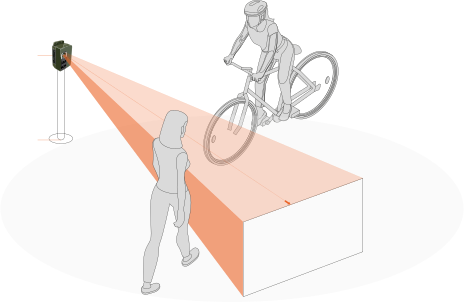
Clear reading of the directions of passage and differentiation between pedestrians, cyclists and vehicles.

Online consultation or local survey in remote areas.
Vehicle counting does not always require heavy infrastructure. In many cases, the objective is to monitor motorised flows in narrow passages, controlled accesses or streets where vehicles pass one by one. This is precisely where Verdilo provides reliable data — with no civil works, no power supply and no intrusive installation.
Where a camera would require a power connection, a dedicated mast or significant capital expenditure, Verdilo can be mounted in minutes and runs autonomously. It fits municipal streets, parking entrances, recycling centre accesses, shared areas or residential streets where vehicles naturally slow down.
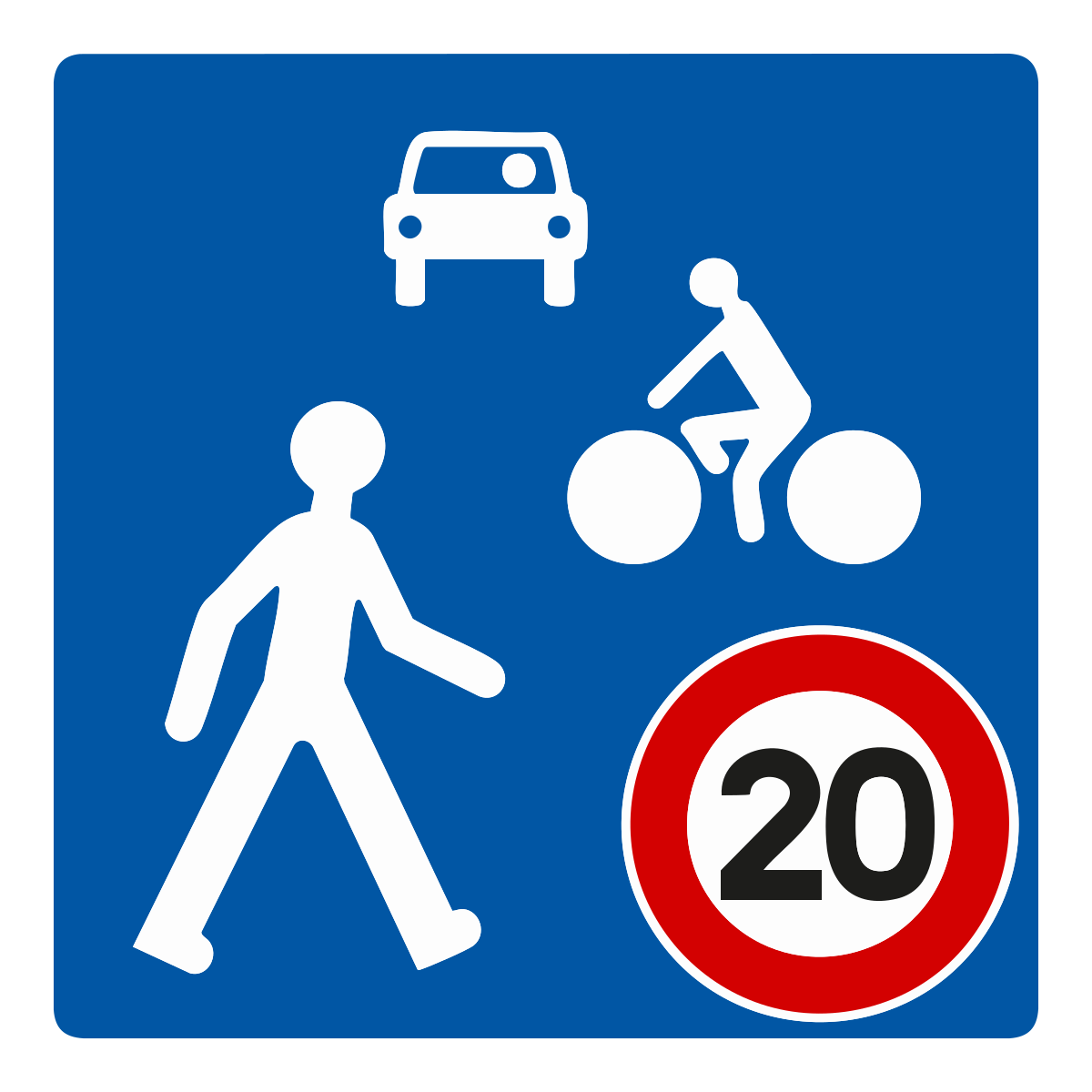
When the context allows it, Verdilo can also differentiate cars from bicycles and pedestrians, enabling detailed analysis of shared spaces or mixed accesses.
This lightweight, mobile and precise approach covers the majority of needs encountered by local authorities, companies, site operators and consultancies: obtaining clear data quickly to support evidence-based decisions, improve safety and guide action.

Verdilo counters use a combination of thermal and magnetic detection to accurately identify moving vehicles.

Measuring motorised flows provides directly actionable information to understand how a road is actually used, improve safety, or adjust an improvement. Below are the most immediate and useful benefits for local authorities, site managers and companies.
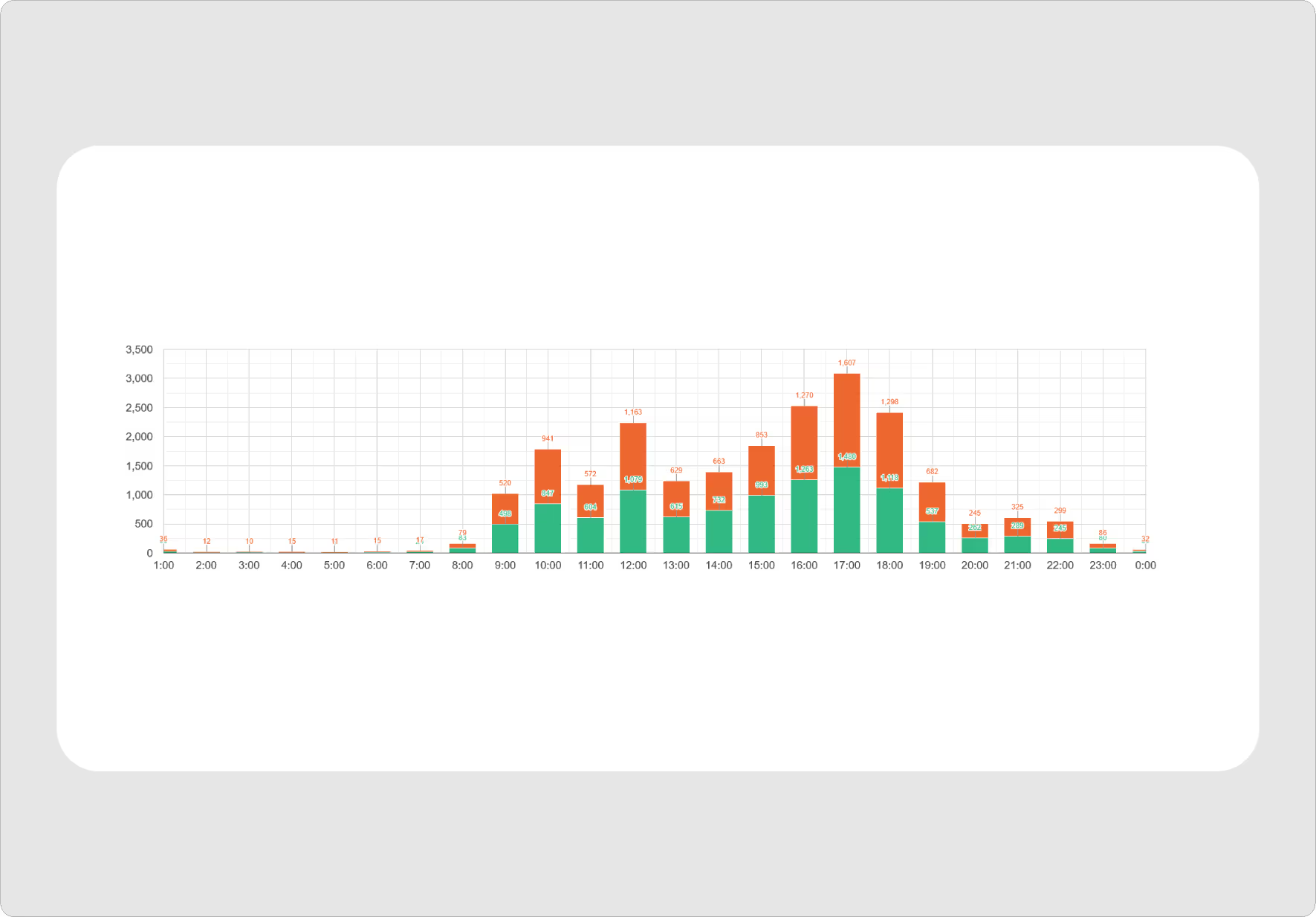
Vehicles per hour, day or season: an essential baseline to distinguish perception from reality, track trends or compare periods.
Morning peaks, evening peaks, irregular weekend flows, surges at parking entrances or near schools: data reveals when a site requires attention or adjustment.
Congested accesses, junctions where flows concentrate, saturated drop-off areas, heavily used recycling centre entrances: measurement helps prioritise where to act.
Traffic calming, direction changes, adding a cycle track, priority changes, chicanes, temporary restrictions: data supports objective before/after assessment.
Entries, exits, turnover and saturation periods: simple, essential data to adjust capacity, anticipate peaks or organise flows during events.
Data becomes a clear arbitration tool: justifying a project, responding to residents’ concerns, preparing public meetings or technical reports.
Client cases


The community monitors the entry of vehicles into several garbage dumps to better understand periods of high traffic and adapt the schedules, organization and resources mobilized. A frequent need: to have reliable figures to manage a very busy service and anticipate seasonal peaks.

The municipality wants to measure the attendance of a religious site accessible by three entry points. The count will be used to support a grant application and to better understand mixed flows. An adapted location makes it possible to obtain pedestrian and vehicle crossings, even if the road is two-way, by providing a reliable estimate of uses.

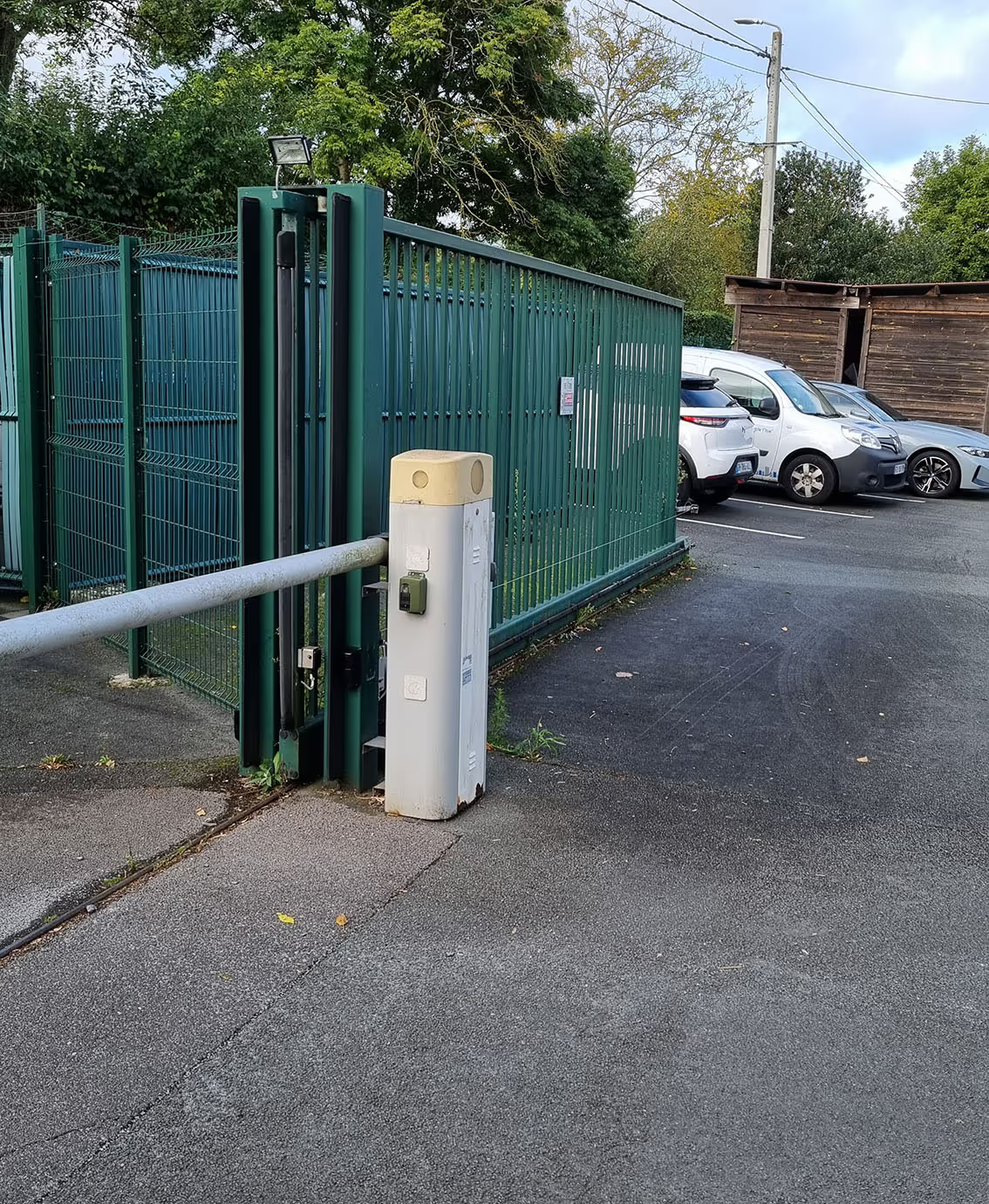
Installation of a unit dedicated to monitoring the attendance of a public car park. The data makes it possible to know the entrances and exits, to observe the periods of full occupancy and to facilitate the planning of services. The case is protected by an anti-vandalism cover to ensure its durability.

The city uses a mobile box to measure bicycle, pedestrian and vehicle crossings on several sites: bike path, greenway, communal street. The data revealed more than 200 daily crossings on an axis where ten times fewer were expected. The itinerant solution makes it possible to test new routes, document the usefulness of developments and support local mobility policy.



Each site is different — we help you choose the easiest and most reliable configuration.


Absolutely not. Unlike traditional meters (magnetic loops in the road or pneumatic tubes), our Verdilo sensor is installed without any civil engineering or electrical connection. It can be attached to an existing post, wall or candelabra in a few minutes.
No, our technology is guaranteed to be 100% video-free. The Verdilo sensor uses thermal detection (for hot flows) coupled with magnetic detection (metal mass). The data collected is therefore completely anonymous from the moment it is captured, which eliminates any complexity associated with the GDPR.
Yes. In mixed channel configurations (width less than 6 meters), the combination of our thermal and magnetic sensors makes it possible to isolate metal masses from simple heat flows. We can thus distinguish a vehicle from a bicycle or a pedestrian to offer you refined mobility data.
No Our philosophy is to provide you with volume and attendance data that is simple, reliable and useful for the development of your public spaces. Verdilo does not make a detailed classification by type of vehicle (truck vs car) and does not record speeds per km/h. It is a mobility analysis tool, not a traffic control tool.
To guarantee an exceptional autonomy of up to 2 years on battery (or total autonomy in a solar version), the box does not transmit data in real time. Information is sent automatically and securely to your Reports platform every 12 hours, which is ideal for calmly analyzing traffic dynamics.
Our sensors, by default, transmit data every 12 hours. This frequency can be set on request. However, if the transmission frequency is increased, this will have consequences on the autonomy of the meter. In fact, we also have a manual data recovery solution for sites that do not have a connection, guaranteeing reliable data tracking, even in isolated locations or without a network.




.svg)

.avif)